Gold is being bought back into favour by the institutions that abandoned it during the Iran war selloff, but the metal is running into resistance just as the geopolitical calm it needs looks fragile again.
Key Points
- Gold has rebounded just under 10% in August to around $4,440 an ounce, breaking above two key technical resistance levels
- The war’s outbreak in late February had driven gold from a January record of $5,595 to below $4,000 by June, as investors sought liquidity and some central banks tapped reserves to support oil-strained economies
- Analysts point to the scale of the rebound as suggesting central bank or sovereign wealth fund buying, alongside institutional rebuilding of large bar positions held before the conflict
- A $1.50 an ounce gold premium in China last week points to renewed buying interest in Asian trading hubs
- September rate hike odds have fallen to 33% from 51% a month earlier, per CME’s FedWatch tool, with Fed July meeting minutes due Wednesday
- A senior Iranian official told Reuters that Tehran would step up tensions in the Strait of Hormuz and the wider region if diplomatic talks with the US break down
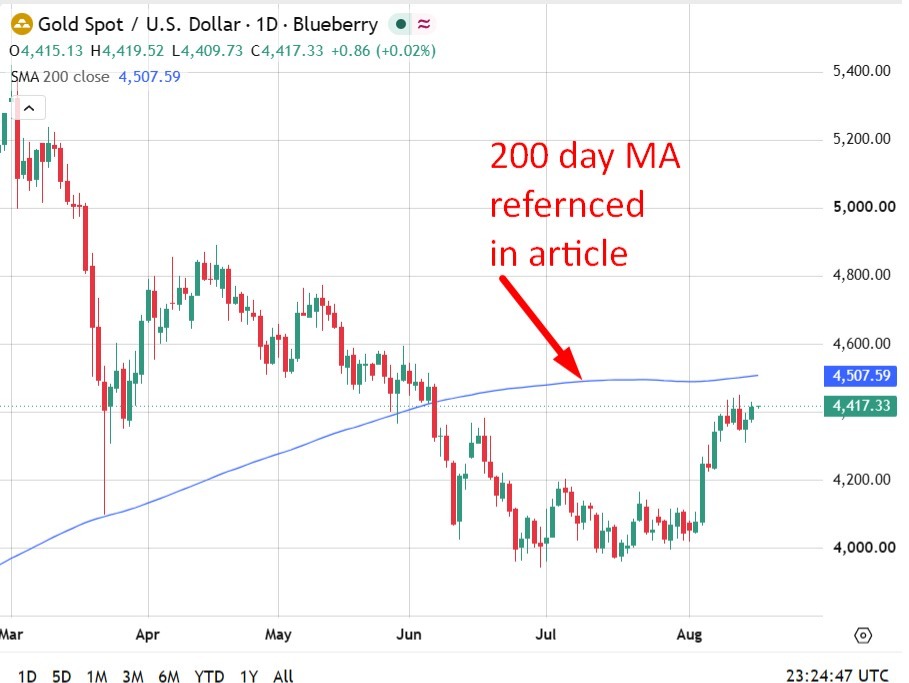
- Headwinds include faltering Iran talks, subdued jewellery and coin demand, modest gold ETF inflows, and the 200-day moving average around $4,500
August Rebound Draws Institutional Interest
Gold is showing early signs of reclaiming its safe haven appeal, rebounding just under 10% in August to around $4,440 an ounce and breaking above two key technical resistance levels as the market moves beyond the initial shock of the US-Israeli war with Iran.
The scale and speed of the rebound is drawing attention from analysts who see it as more than a technical correction. The strength of the move over the past two weeks suggests central banks or sovereign wealth funds may have been active buyers, with evidence of institutional demand for large bars likely indicative of major institutions rebuilding positions they held before the conflict. A $1.50 an ounce gold premium in China last week reinforced the picture of renewed buying interest across Asian trading hubs.
Recovering From the War-Driven Drawdown
The rebound follows a brutal drawdown triggered by the war’s outbreak in late February, which sent gold from a January record of $5,595 an ounce to below $4,000 by June, as investors sought liquidity and some central banks drew on reserves to support economies strained by the accompanying oil price rally. One analyst described the recent move as though that constraint had been lifted from gold.
Dollar Weakness and Fading Rate Hike Bets Provide Support
The macro backdrop has turned more supportive in recent weeks. The US dollar fell to its lowest level in more than two months, making gold cheaper for holders of other currencies, while markets pared bets on a Federal Reserve rate hike following weaker than expected payrolls and softer consumer inflation data. Traders now see a 33% probability of a September rate rise, down from 51% a month earlier, according to CME’s FedWatch tool. One analyst framed the current environment as the market pricing in a stagflationary outlook. Minutes from the Fed’s July meeting, due Wednesday, should provide further clues on the policy direction.
Geopolitical Risk and Technical Resistance Cap the Upside
The main technical headwind is the 200-day moving average sitting at $4,504, with the relative strength index signalling the market is approaching near-term overbought territory. A senior Iranian official said Tehran would step up tensions in the Strait of Hormuz and across the region should diplomatic efforts with the US break down — a reminder that the same geopolitical volatility that drove gold’s initial surge and subsequent collapse remains unresolved. Faltering Iran talks, soft jewellery and coin demand, and modest ETF inflows of just $7 billion against $582 billion in assets under management represent additional constraints on the more bullish case.